|
The State of BPM: Top-Five Trends
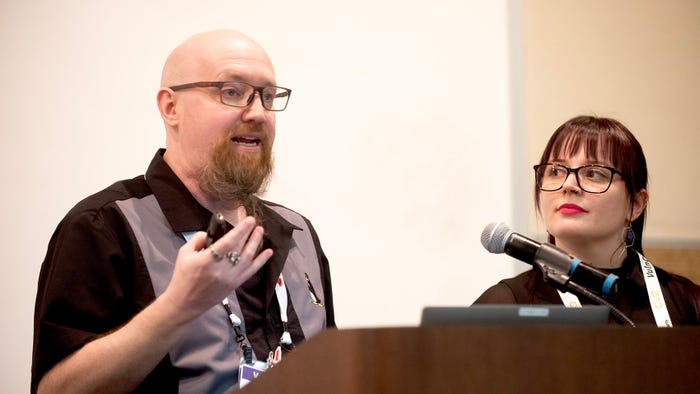
Speaking at this week's Gartner BPM Summit in Las Vegas, Jay Simons, VP of Marketing for BEA, presented the company's recent research results on the state of the BPM market, including a survey of 200-plus BEA customers, mostly IT people but spread across vertical markets and geographies. They've also gathered information through their online BPM Lifecycle Assessment. The results show a number of interesting trends indicating that CIOs and business leaders are focused on improving their processes. Existing customers described how they expect to get their ROI from their BPM implementations, and most expect to see ROI over the next three years. 1. IT embraces BPM enterprisewide, which broadens the scope for BPM beyond the existing departmental systems, and centralizes the practices around BPM. In general, this is occurring because of the ability of BPM to connect applications into improved business processes; more than half already are or will be connecting BPM and SOA in their environment. 2. BPM is becoming event-driven, in order to support the event-driven nature of business today. This will result in much more agile processes that can respond to both expected and unexpected events. 3. Increased focus on knowledge-intensive processes, and using collaborative BPM to enable ad hoc processes both on their own or as an offshoot from a structured process. That includes a variety of collaborative activities, including producing documents, sharing collaborative workspaces, and discussion forums. More than 90 percent of BEA customers indicated that they have some sort of collaborative processes. 4. Enterprise social computing (Enterprise 2.0) as it starts to impact BPM, which I've been writing about for a couple of years: introducing tagging, wiki, social connectedness and the like with more traditional process management in order to add context and more easily collaborate. 5. Moving towards dynamic business applications, and how BPM holds a central role in that. Yvonne Genovese spoke in this keynote about the move towards dynamic/composite applications in order to free organizations from the pre-canned logic in packaged enterprise applications, but BPM (together with services exposed in an SOA layer) allows for the fast assembly of applications that are more suited to current business needs. I collaborated with BEA on the white paper resulting from this research, which they're distributing a sneak preview version here at the show and will have more widely available on their website in about two weeks; consider as this disclosure that BEA is my client in case you haven't checked my disclosure page lately. E-MAIL | SLASHDOT | DIGG This is a public forum. CMP Technology and its affiliates are not responsible for and do not control what is posted herein. CMP Technology makes no warranties or guarantees concerning any advice dispensed by its staff members or readers. Community standards in this comment area do not permit hate language, excessive profanity, or other patently offensive language. Please be aware that all information posted to this comment area becomes the property of CMP Media LLC and may be edited and republished in print or electronic format as outlined in CMP Technology's Terms of Service. Important Note: This comment area is NOT intended for commercial messages or solicitations of business.
|
Blog Channels
Cindi Howson on Business Intelligence The Brain Food Blogger Tony Byrne on Content Management SQL Puzzlers by Joe Celko Rajan Chandras on IT & Information Management Seth Grimes on Analytics In Context by Doug Henschen Phil Kemelor on Web Analytics Sandy Kemsley's Column Two Nelson King on Enterprise App Development David Linthicum on Software as a Service Natural Insight, By Mark Madsen Alan Pelz-Sharpe on Content Management Mark Smith on Performance Management Neil Raden on Business Intelligence Bruce Silver on Business Process Management Product Maven Subscribe to RSS Archives
|
|
|